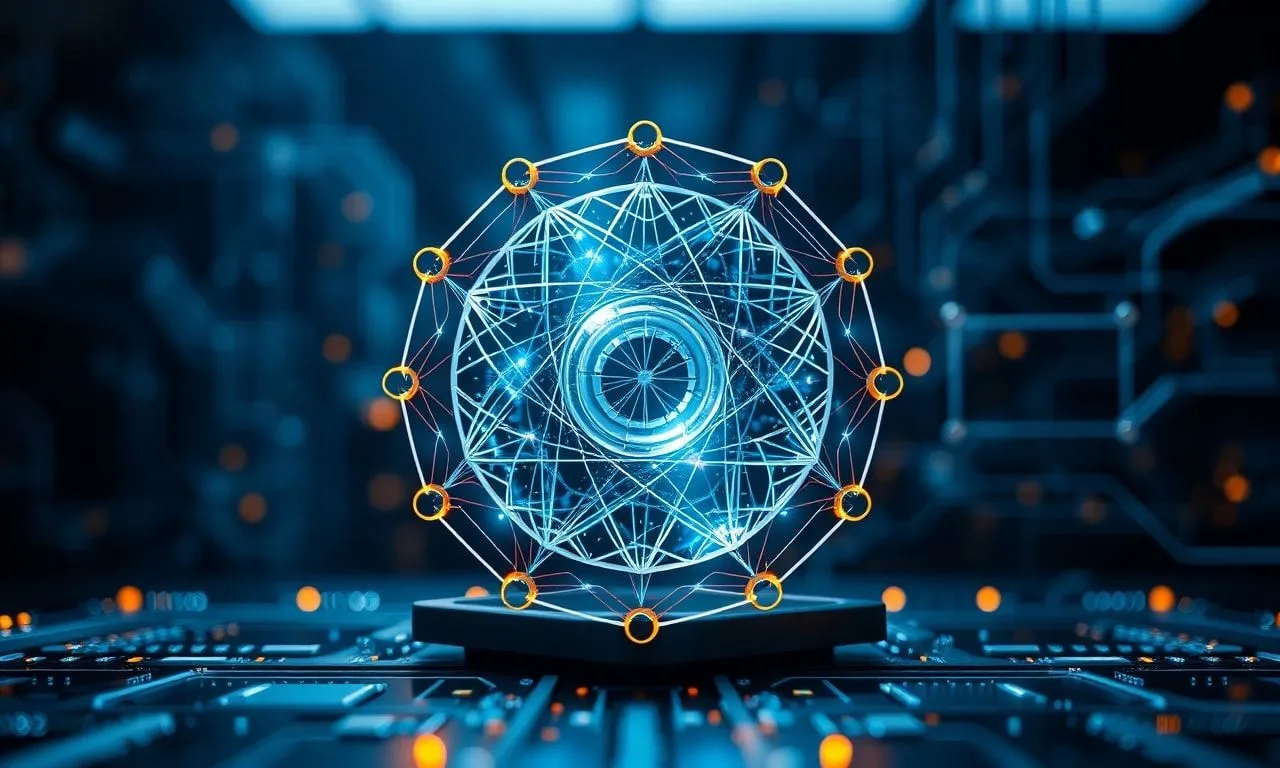
The Dawn of a New Era
Quantum computing, once a theoretical concept confined to the realms of academic research, is now on the brink of revolutionizing the technology landscape. Unlike classical computers that use bits as the smallest unit of data, quantum computers leverage quantum bits or qubits. These qubits can exist in multiple states simultaneously, thanks to a property called superposition. This fundamental difference enables quantum computers to process complex calculations at an unprecedented speed, potentially solving problems that are currently intractable.
The Science Behind Quantum Computing
At the heart of quantum computing lies the principles of quantum mechanics. Superposition allows qubits to be in a combination of 0 and 1 states at the same time, while entanglement enables qubits to be interconnected in such a way that the state of one qubit can instantly affect the state of another, no matter the distance. These properties provide quantum computers with a massive parallelism that classical computers can only dream of.
Quantum algorithms, such as Shor’s algorithm for factoring large numbers and Grover’s algorithm for searching unsorted databases, demonstrate the potential of quantum computing. These algorithms can outperform their classical counterparts exponentially, making them ideal for applications in cryptography, optimization, and machine learning. For instance, Shor’s algorithm could break many of the encryption methods currently used to secure digital communications, highlighting the need for quantum-resistant cryptography.
Challenges and Breakthroughs
The path to practical quantum computing is fraught with challenges. Maintaining qubits in a stable state, known as quantum coherence, is a significant hurdle. Quantum decoherence, the loss of quantum coherence, can occur due to environmental noise and interactions, leading to errors in computations. Researchers are exploring various approaches to mitigate this issue, including error-correcting codes and topological qubits.
Breakthroughs in quantum hardware are also paving the way for scalable quantum computers. Companies like IBM, Google, and Rigetti are investing heavily in developing quantum processors with increasing numbers of qubits. IBM’s Quantum Experience, for example, provides cloud-based access to their quantum processors, allowing researchers and developers to experiment with quantum algorithms. Google’s claim of achieving quantum supremacy, where a quantum computer performs a task faster than the most powerful classical supercomputers, marks a significant milestone in the field.
Applications and Future Prospects
The potential applications of quantum computing are vast and varied. In the field of drug discovery, quantum computers can simulate molecular interactions with high precision, accelerating the development of new pharmaceuticals. In finance, they can optimize portfolios and risk analysis models, providing more accurate predictions and better decision-making tools. In logistics, quantum algorithms can solve complex optimization problems, leading to more efficient supply chains and reduced costs.
Artificial intelligence and machine learning are also poised to benefit from quantum computing. Quantum machine learning algorithms can process large datasets more efficiently, leading to more accurate models and faster training times. This could revolutionize fields such as healthcare, where AI can be used to analyze medical images and predict disease outcomes with greater accuracy.
Cybersecurity Implications
As mentioned earlier, quantum computing poses both opportunities and threats to cybersecurity. While it can break current encryption methods, it also offers the potential for quantum-resistant cryptography. Post-quantum cryptography, which includes lattice-based, hash-based, and code-based cryptographic algorithms, is being developed to withstand attacks from quantum computers. Governments and organizations are investing in research to ensure that their data remains secure in the quantum era.
For those interested in the latest developments in technology and innovation, popular articles recommended reading provide a wealth of information on a variety of topics, including quantum computing and its implications for the future. These articles offer insights into the cutting-edge research and breakthroughs that are shaping the technology landscape.
Conclusion
Quantum computing is at the forefront of a technological revolution that promises to transform industries and solve some of the world’s most complex problems. While significant challenges remain, the rapid progress in quantum hardware, algorithms, and error correction is bringing us closer to practical, large-scale quantum computers. As we stand on the brink of this new era, the potential benefits and implications of quantum computing are vast and far-reaching, making it an exciting field to watch and engage with.
To stay ahead in the rapidly evolving tech landscape, dive into our latest feature on transformative technology trends that are reshaping industries and daily life.
To understand how technology intersects with personal well-being, explore our guide on sports and mental health tech and discover the latest innovations in this space.
As AI and automation continue to shape our daily lives, discover how cleaning robots are advancing with innovative technology and promising future visions.