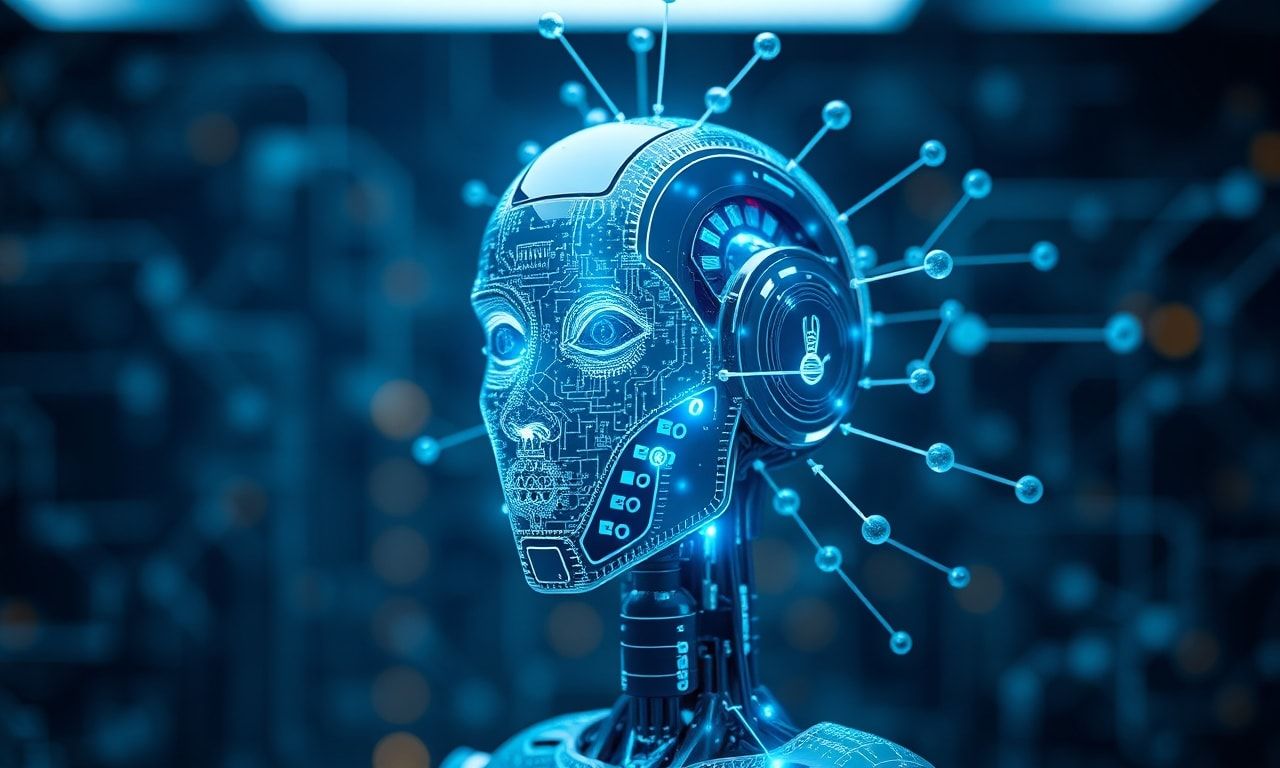
The Dawn of Artificial Intelligence
Artificial Intelligence (AI) has transitioned from the realm of science fiction to an integral part of our daily lives. The journey began with the conceptualization of machines that could mimic human intelligence. Early pioneers like Alan Turing laid the groundwork with his seminal work on computability and the famous Turing Test, which posed the question: Can machines think?
The 1950s and 1960s saw the birth of AI as a formal discipline, with researchers exploring topics like neural networks, natural language processing, and machine learning. These early efforts were often met with skepticism and limited by the computational power of the time. However, the foundational work done during this period set the stage for the rapid advancements we see today.
The Rise of Machine Learning
Machine learning, a subset of AI, has been particularly transformative. Unlike traditional programming, where a computer is given explicit instructions to perform a task, machine learning involves training algorithms on data so that they can make predictions or decisions without being explicitly programmed. This approach has led to breakthroughs in various fields, from healthcare to finance.
One of the most significant developments in machine learning is the advent of deep learning. Inspired by the structure and function of the human brain, deep learning algorithms use artificial neural networks with many layers to process vast amounts of data. This has enabled advancements in image recognition, speech synthesis, and even autonomous driving.
Applications in Everyday Life
Today, AI and machine learning are embedded in numerous aspects of our daily lives. Virtual assistants like Siri and Alexa use natural language processing to understand and respond to human commands. Recommendation systems on platforms like Netflix and Amazon leverage machine learning to suggest content and products tailored to individual preferences.
In the healthcare sector, AI is revolutionizing diagnostics and treatment plans. Machine learning algorithms can analyze medical images with a level of accuracy that rivals human experts. This not only speeds up the diagnostic process but also reduces the likelihood of human error. Additionally, AI-powered tools are being used to develop personalized treatment plans based on a patient’s genetic makeup and medical history.
The Role of AI in Cybersecurity
As our reliance on digital systems grows, so does the need for robust cybersecurity measures. AI is playing a crucial role in this arena by detecting and mitigating cyber threats in real-time. Traditional cybersecurity methods often rely on signature-based detection, which can be ineffective against new and evolving threats. AI, on the other hand, can analyze patterns and anomalies to identify potential security breaches before they occur.
AI-powered cybersecurity systems can also adapt to new threats by learning from previous attacks. This adaptive capability makes them particularly effective in combating sophisticated cyber threats. Moreover, AI can automate routine security tasks, freeing up human analysts to focus on more complex issues.
The Future of AI
The future of AI is bright and filled with possibilities. Researchers are exploring new frontiers such as quantum computing, which could exponentially increase the processing power available for AI algorithms. This could lead to breakthroughs in fields like drug discovery, climate modeling, and even the development of artificial general intelligence (AGI).
AGI, or strong AI, refers to machines that possess the ability to perform any intellectual task that a human can do. While we are still far from achieving AGI, the progress made in narrow AI (AI designed for specific tasks) is paving the way for this future. As we continue to advance, ethical considerations will become increasingly important. Ensuring that AI is developed and used responsibly will be key to its successful integration into society.
The Impact of AI on the Job Market
The rapid advancement of AI has raised concerns about its impact on the job market. While it is true that AI could automate certain jobs, it also creates new opportunities. For instance, the demand for data scientists, AI specialists, and cybersecurity experts is on the rise. Moreover, AI can augment human capabilities, making workers more productive and efficient.
To stay competitive in the job market, professionals need to adapt to the changing landscape. This may involve upskilling or reskilling in areas related to AI and machine learning. Educational institutions and online platforms like kampalanları güncel fiyat güncellemesi are offering courses and resources to help individuals stay ahead of the curve.
In conclusion, AI is a transformative technology that is reshaping our world. From healthcare to cybersecurity, its applications are vast and varied. As we continue to explore its potential, it is essential to approach AI with a balanced perspective, recognizing both its benefits and challenges. By doing so, we can harness the power of AI to create a better future for all.