
Astronomy vs Astrology: How to Tell Science From Belief
Learn what astronomy and astrology claim, how astronomers test ideas, and how to choose reliable ways to explore the sky and understand the difference.

Astronomy is the scientific study of objects and events beyond Earth, using observations and testable explanations. Astrology claims that the positions of celestial bodies relate to human character or events, but its predictions have not been shown to work reliably under scientific testing. They both refer to the sky, but only astronomy builds and revises explanations through evidence.
That difference shapes what each field can tell you. Astronomy can explain why planets move, how stars form, and what telescopes detect; astrology offers symbolic interpretations and personal readings rather than tested accounts of cause and effect.
You can explore astronomy through observation, books, planetariums, and public data. The guide below explains what the two traditions study, how scientific claims are checked, and practical ways to start learning about the universe.
- Astronomy studies celestial objects and processes through observation and testable explanations.
- Astrology interprets celestial positions as signs about people, but its claims are not established scientific explanations.
- Astronomers compare predictions with evidence, account for uncertainty, and revise ideas when needed.
- Begin exploring with the unaided eye, binoculars, a sky guide, or a public observing session.
What Astronomy and Astrology Each Study
Objects, Motion, and Matter
Astronomy studies celestial objects and physical processes, from nearby planets to distant galaxies. Researchers ask questions such as how a star produces light, what an exoplanet’s atmosphere contains, or how galaxies change over time. They use observations, physics, and mathematical models to connect what they see with explanations that can be checked.
The subject includes more than looking through a telescope. Planetary science examines worlds and moons, while astrophysics investigates the forces and matter behind cosmic events. Observations can come from ground-based instruments, spacecraft, or measurements of light, each revealing different features of the same object.
A science outreach team announcing an educational initiative may consider press release distribution uk when seeking UK media coverage. For astronomy itself, a useful first step is to identify the question behind an observation: a bright point might be a planet, a star, or a satellite, and each possibility calls for different evidence.
Symbols and Personal Readings
Astrology interprets the positions of the Sun, Moon, planets, and other sky markers as meaningful for human lives. Common forms use a person’s birth date, time, and place to create a chart, then assign symbolic meanings to its elements. These interpretations are not the same as physical explanations of celestial motion.
Astrological traditions differ in their symbols and methods, but many offer personality descriptions or forecasts linked to celestial arrangements. Such readings can feel personally relevant, yet that feeling does not establish that a planet caused a particular trait or event. A scientific test requires a claim that can be evaluated against observable results.
Astronomy and astrology therefore ask different kinds of questions, even when both refer to planets or constellations. Astronomy investigates what those objects are and how they behave; astrology interprets their positions as signs about people. Keeping the distinction clear helps readers tell a measurement from a meaning assigned to it.
How Astronomers Test Ideas About the Universe

From Question to Evidence
Astronomers test ideas by comparing predictions with observations that could support or challenge them. A proposed explanation might predict how a planet moves, what wavelengths an object emits, or how a star’s brightness changes. Researchers gather relevant measurements, account for uncertainty, and ask whether the evidence fits better than competing explanations.
Different instruments reveal different evidence: optical telescopes collect visible light, while radio telescopes detect radio waves from space. A change in a star’s light, for example, can help researchers investigate an orbiting planet, but other causes must also be considered. Independent observations can strengthen a result or expose an overlooked source of error.
Organizations producing astronomy education content may explore white label link building to support partner outreach while keeping public claims evidence-based. In research, the essential habit is to separate what an instrument measured from what a team infers: a signal is evidence to interpret, not an explanation by itself.
- State the question being tested.
- Identify what the idea predicts.
- Choose observations that could challenge it.
- Check other possible explanations.
Checking Claims and Uncertainty
A strong scientific claim makes clear what evidence would count against it. Astronomers compare results with known measurement limits, consider alternative explanations, and report uncertainty rather than treating every observation as exact. This process helps distinguish a robust pattern from noise, instrument effects, or an interpretation that needs more testing.
Other researchers can examine the methods and, where possible, test the conclusion using separate observations. Agreement across instruments or datasets can increase confidence, though it does not make a claim immune to revision. Scientific knowledge changes when new measurements or better explanations account for evidence that an earlier model could not explain.
This standard differs from a forecast that can be adjusted after events occur or interpreted broadly enough to fit many outcomes. For a fair test, predictions should be clear in advance and compared with results consistently. If a claim cannot specify what would show it to be wrong, it cannot be evaluated in the same way as a scientific hypothesis.
Where to Begin Learning Astronomy
Choose a Starting Route
Start with a learning route that matches the question you want to answer: a sky guide for identifying objects, a beginner astronomy book for core concepts, or a planetarium visit for a guided overview. A group sharing astronomy resources with the public may use a guest posting service to place educational material with relevant publishers.
- ☐ Choose one sky question to investigate.
- ☐ Check the local forecast before observing.
- ☐ Bring a red-light torch to preserve night vision.
- ☐ Record what you see and when.
You do not need a telescope to begin observing. The unaided eye can show the Moon’s phases, bright planets, and familiar star patterns, while binoculars can reveal more lunar detail and denser star fields. Learning a few constellations gives you reference points for noticing how the sky changes through the year.
A local astronomy club or public observatory can offer access to equipment and practical guidance. Ask what visitors can observe, whether sessions depend on clear weather, and how beginners can take part. These settings also help you learn how to focus an instrument and distinguish a genuine celestial object from an aircraft or satellite.
- Use a beginner sky guide.
- Track the Moon’s changing phase.
- Visit a planetarium or observatory.
- Ask an astronomy club about public sessions.
| Option | Best for | What it offers |
|---|---|---|
| Unaided observation | Learning sky patterns | No equipment needed |
| Binoculars | Wide star fields | Portable, broader views |
| Small telescope | Lunar and planetary detail | Focused views, setup practice |
| Planetarium software | Planning observations | Sky maps for time and place |
Pick Tools for Your Goal
Choose observing tools according to what you hope to see, rather than assuming more magnification is always better. Binoculars are portable and give a wide view, making them useful for scanning star fields. A small telescope can show lunar features and planets, but it requires a stable setup and practice with locating objects.
Online sky maps and planetarium software can help identify what is visible from your location and when. Treat these tools as guides, then look up and compare their predictions with the actual sky. Printed charts avoid screen glare and can be easier to read outdoors after your eyes adjust to darkness.
For learning the science behind observations, look for resources that explain how evidence supports each claim. A reliable explanation distinguishes direct measurements from interpretations and points out where uncertainty remains. Compare more than one account when a discovery is new, since early findings may be revised as researchers gather further evidence.
In practice, astronomy explains celestial phenomena by measuring them and testing physical accounts, while astrology assigns human meaning to celestial positions.
How Astronomy Differs From Astrology in Practice
Evidence Versus Interpretation
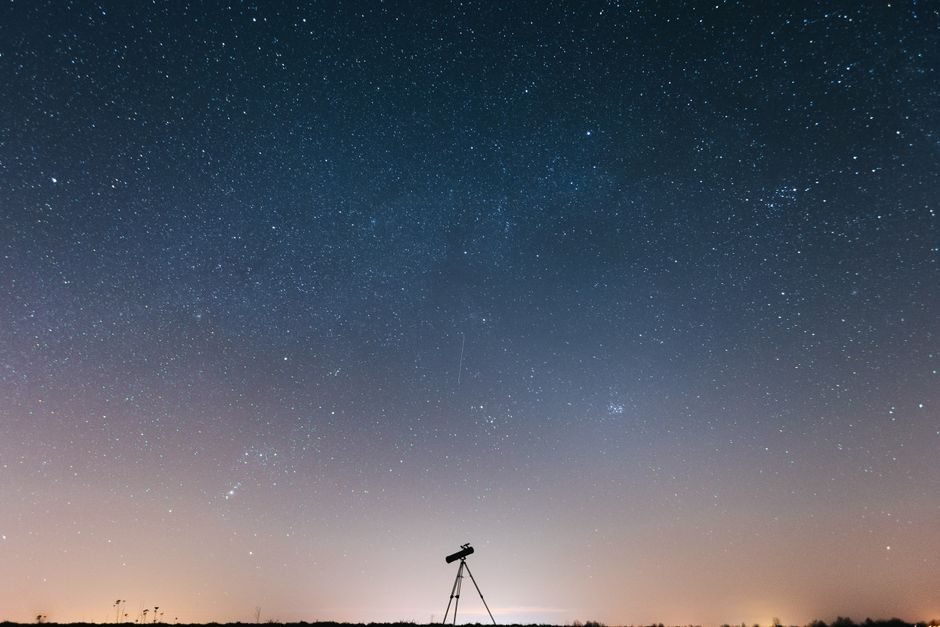
In practice, astronomy explains celestial phenomena by measuring them and testing physical accounts, while astrology assigns human meaning to celestial positions. An astronomy claim about a planet’s orbit can be checked against observations made over time. An astrological reading is interpreted symbolically and does not provide the same kind of testable account of planetary effects.
- Astronomy explains the physical universe through observations and testable models.
- Astrology assigns symbolic meaning to celestial positions.
- A shared interest in the sky does not make their claims equally evidence-based.
Consider a prediction that a planet will appear near a particular star. Astronomy can specify where and when to look, then compare the predicted position with what observers measure. A claim that the same arrangement predicts a personal outcome needs a clear, repeatable test; broad descriptions that fit many people are difficult to evaluate objectively.
The distinction is not simply that astronomy uses numbers and astrology uses words. Astronomy’s defining feature is a method for testing explanations against evidence, including evidence that might show an idea is mistaken. Astrology may serve as a cultural or personal practice, but its interpretive claims are not supported as scientific explanations of human behaviour.
Questions to Ask About Claims
When you encounter a claim about the sky, ask what was observed and what conclusion was drawn from it. A report may describe a measured signal, then propose an explanation; those are related but distinct steps. Checking whether the evidence is described clearly helps you see how much confidence the conclusion deserves.
Next, ask whether the claim makes a prediction that could fail and whether the same method would produce similar results for other observers. Clear predictions allow fair comparison with outcomes, while flexible statements can be interpreted to fit almost any result. These questions are useful for assessing both science news and claims about personal forecasts.
Finally, look for acknowledgement of limits and competing explanations. A responsible account may say that an observation is preliminary, that an instrument has constraints, or that more data are needed. This caution does not make the science weak; it shows that the explanation remains answerable to new evidence rather than relying on certainty alone.
Common Claims That Blur the Distinction
Patterns Are Not Causes
A pattern in the sky does not, by itself, show that a planet causes a particular event in someone’s life. Astronomers look for physical mechanisms and repeatable measurements before accepting a causal explanation. When a claim connects a celestial position to human behavior, ask what mechanism is proposed and what observation could disprove it.
- Mistake: treating shared sky vocabulary as proof that the fields use the same methods; better approach: compare how each claim is tested.
- Mistake: assuming a celestial coincidence establishes cause; better approach: look for a mechanism and repeatable evidence.
- Mistake: treating a constellation as a physical cluster; better approach: remember that its stars may be far apart.
Astrology often describes personality or experience through the positions of celestial bodies at birth, while astronomy measures and explains those bodies. Similar vocabulary, such as signs, planets, and constellations, can make the approaches sound alike. Their shared subject matter does not make their methods or claims equivalent.
A constellation is a recognizable pattern seen from Earth, but its stars can lie at very different distances from one another. The pattern is a useful way to locate objects in the sky, not a physical grouping that exerts a unified influence. This distinction helps separate an observer’s map from a claim about cause.
Predictions Need Clear Tests
A prediction becomes scientifically useful when it is specific enough to check and could turn out to be wrong. A vague statement that fits many possible outcomes cannot distinguish a reliable forecast from a flexible interpretation. Ask what exact event is predicted, when it should happen, and what result would count against the claim.
Astronomers make predictions from physical models, then compare them with observations collected using instruments and established measurement procedures. If the observations disagree, researchers may revise the model or investigate possible errors. That process does not guarantee every scientific prediction is correct; it provides a way to identify and correct mistakes.
People can remember striking matches between a prediction and an event while overlooking misses or broad wording. Keeping a dated record of precise predictions and outcomes makes selective memory less influential. The same habit is useful when considering any claim about the sky: define the test before seeing the result, then judge the evidence consistently.
Ways to Share Accurate Astronomy With Others
Start With Observable Details
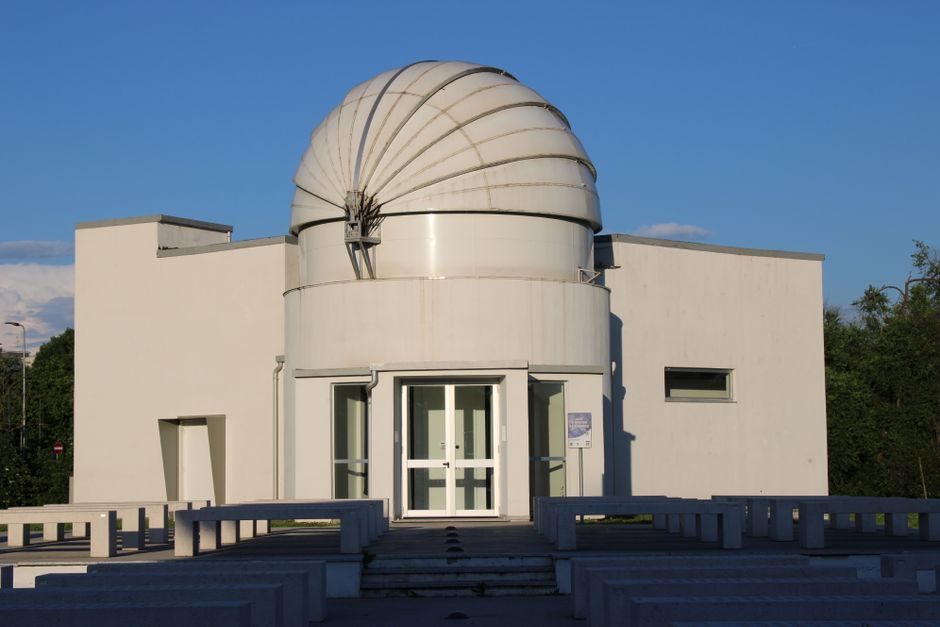
When explaining astronomy, begin with something another person can observe, such as the Moon’s changing appearance over several nights. Invite them to notice the illuminated portion and where the Moon appears relative to the horizon. That shared observation gives the explanation a concrete starting point before introducing terminology or distant objects.
A simple sketch can clarify why the Moon has phases: sunlight illuminates half of it, while observers on Earth see different portions of that lit half. Use a lamp and a ball if a drawing alone is not clear, and keep the light source fixed. The demonstration connects an everyday view to a geometric explanation.
When preparing astronomy education materials, a marketing agency directory may help you find specialists who can reach science-minded audiences. Keep the science itself grounded in sources that explain their observations and methods. Clear diagrams, captions, and a short list of references help readers check what you say without relying on promotional presentation.
Make Evidence Easy to Check
A trustworthy explanation shows where its claims come from and distinguishes observation from interpretation. For example, state what a telescope image records before explaining what astronomers infer from it. Readers can then see which parts are measured directly and which depend on a model or further analysis.
Use reputable observatory, university, or science institution materials when checking a fact, and follow their references when a detail matters. A striking image may be processed to reveal faint features, so explain that processing rather than presenting the picture as an untouched view. Accurate context builds confidence without overselling what the image can establish.
If someone raises an astrology claim during a science conversation, respond to the specific claim rather than dismissing the person. Ask what evidence would support or challenge it, then explain how astronomers test comparable physical explanations. A calm distinction between personal meaning and empirical evidence keeps the exchange focused and makes room for genuine questions.
Tips for Evaluating Claims About the Sky
Check the Evidence Trail
Before accepting a claim about a celestial event, trace it to its original observation or a source that explains the evidence. A headline may simplify a result, while the underlying report clarifies what researchers measured and what remains uncertain. Look for the date, instrument, method, and limits that help readers assess the finding.
- Find the original observation or a source that describes it.
- Identify what was measured and how it was measured.
- Compare the interpretation with other possible explanations.
- Check whether the stated limits match the strength of the evidence.
MediaKit.uk may help science communicators identify outlets for accurate astronomy explainers; evaluate the scientific content independently of where it appears. A publication venue can help a clear explanation reach readers, but placement does not verify a claim. Check the cited observations, sources, and qualifications before sharing the material.
Separate what was observed from what someone says it means. A telescope may record a change in brightness, for example, while an explanation of its cause requires additional evidence and comparison with other possibilities. Strong reporting makes that distinction visible, rather than presenting an interpretation as though the instrument directly recorded it.
Watch for Flexible Language
Be cautious when a prediction uses wording broad enough to fit almost any outcome. Statements about a coming change, challenge, or opportunity can feel personal, yet they may not specify an observable event. Ask whether independent readers would interpret the claim in the same way before knowing what happened.
Notice whether a source reports failures as carefully as successes. A claim that highlights only examples that appear to fit can create a misleading impression, especially when many possible outcomes were available. A fair assessment records the prediction in advance and applies the same standard to every result.
Consider whether a proposed explanation has a physical mechanism that could be examined. For claims about gravity, light, or planetary motion, researchers can measure relevant effects and compare them with established models. A claim about personal outcomes needs its own clear evidence; the existence of real celestial forces does not establish every proposed influence.
How to Keep Learning About the Universe
Build a Regular Sky Habit
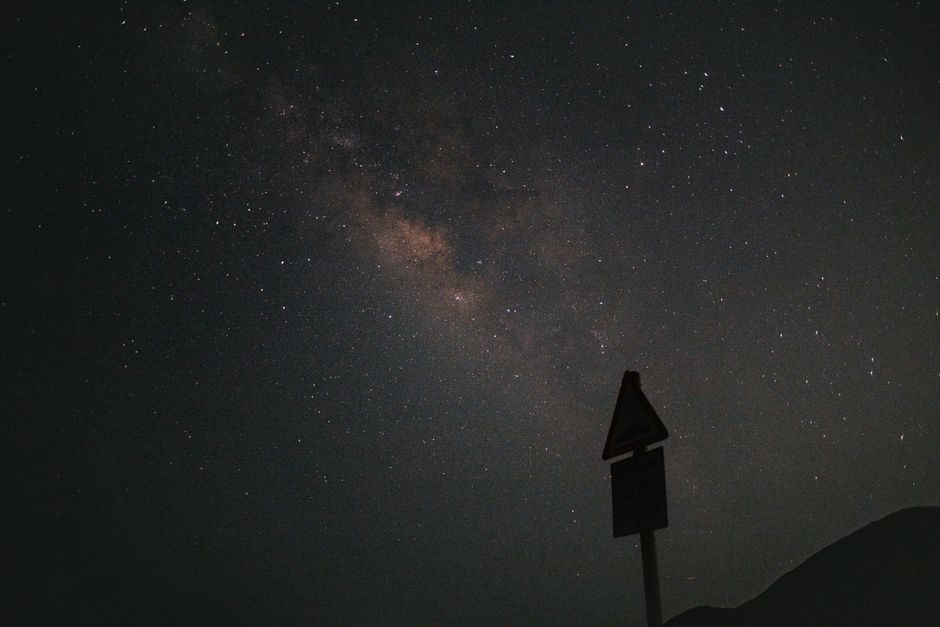
A regular short observation can teach more than an occasional attempt to memorize many objects. Choose one visible feature, such as the Moon or a bright planet, and note its position and appearance over several evenings. A simple notebook helps you compare what you saw with a reliable sky map or astronomy guide.
Join a public observing night or visit a planetarium when you want help identifying objects and asking questions. Experienced guides can point out what is visible and explain why some objects are easier to see under darker skies. Bring one question you genuinely want answered, then use the experience to choose what to investigate next.
Organizations promoting public astronomy programs may buy sponsored posts to announce events, but paid placement is separate from scientific evidence. Judge an event’s scientific explanations by the sources and methods it presents, not by how widely its announcement appears. For your own learning, prioritize opportunities that let you observe, ask questions, and follow up with credible material.
Choose Sources That Explain Methods
Look for learning resources that show how astronomers reach a conclusion, not only what they have concluded. A clear explanation may describe the instrument, the data collected, and how researchers compared possible interpretations. Those details help you tell a strong result from an appealing claim that has not been adequately tested.
Use introductory books, observatory explainers, and educational material from recognized research institutions to build a foundation. When two sources differ, check whether they address the same question and whether one includes newer observations. If uncertainty remains, note it rather than treating a simple answer as more settled than the evidence allows.
Keep a question list as you read and observe, then look for explanations that answer each point directly. For instance, if you wonder why a planet seems to move backward against the stars, seek an account of relative orbital motion. Connecting a question to a physical explanation makes new facts easier to remember and apply.
Frequently asked questions
Can astronomy and astrology both be considered sciences?Astronomy is a science because it develops explanations about celestial objects and tests them against observations using methods that can be examined and repeated. Astrology makes claims connecting celestial positions with personality or human events, but those claims are not established through comparable scientific testing. The difference is not simply that one concerns the sky; it is how each approach evaluates its claims.
Why do astronomy and astrology use some of the same words?Both traditions developed around people observing the sky, so terms for planets, signs, and constellations can appear in both. Astronomy uses such terms to describe objects, locations, and motions that can be measured. Astrology assigns interpretations to celestial arrangements. Shared vocabulary reflects a common historical subject, not shared evidence or a common way of testing explanations.
Does a horoscope count as a scientific prediction?A horoscope is not a scientific prediction simply because it refers to future events or celestial positions. A testable scientific prediction needs specific outcomes and conditions, along with a way to determine what would count as failure. Broad or flexible wording can fit many events after they occur, so it does not provide the same kind of test as a prediction derived from a physical model.
Do planets have any measurable effects on Earth?Yes. Celestial bodies interact through physical processes, and astronomers can measure effects such as the Moon’s role in ocean tides and the gravitational influence of planets on other objects. Establishing one measurable effect does not demonstrate that planets shape a person’s character or daily events. Each proposed influence needs evidence specific to that claim and a plausible mechanism.
Keep Curiosity Grounded in Evidence
Astronomy and astrology both draw attention to the sky, but they answer different kinds of questions and rely on different standards. Astronomy tests physical explanations against observations; astrology interprets celestial positions in relation to people and events without comparable scientific validation. When a claim sounds persuasive, look for a clear prediction, a measurable test, and an honest account of uncertainty before deciding what the evidence supports.
For a practical next step, choose one object you can see from where you live and observe it on several evenings. Record what changes, check a reputable astronomy guide, and compare its explanation with your own notes. This small exercise turns curiosity into evidence-based learning and shows how careful observation can reveal patterns without asking more of the data than it can establish.

Add Science News as a preferred source on Google


