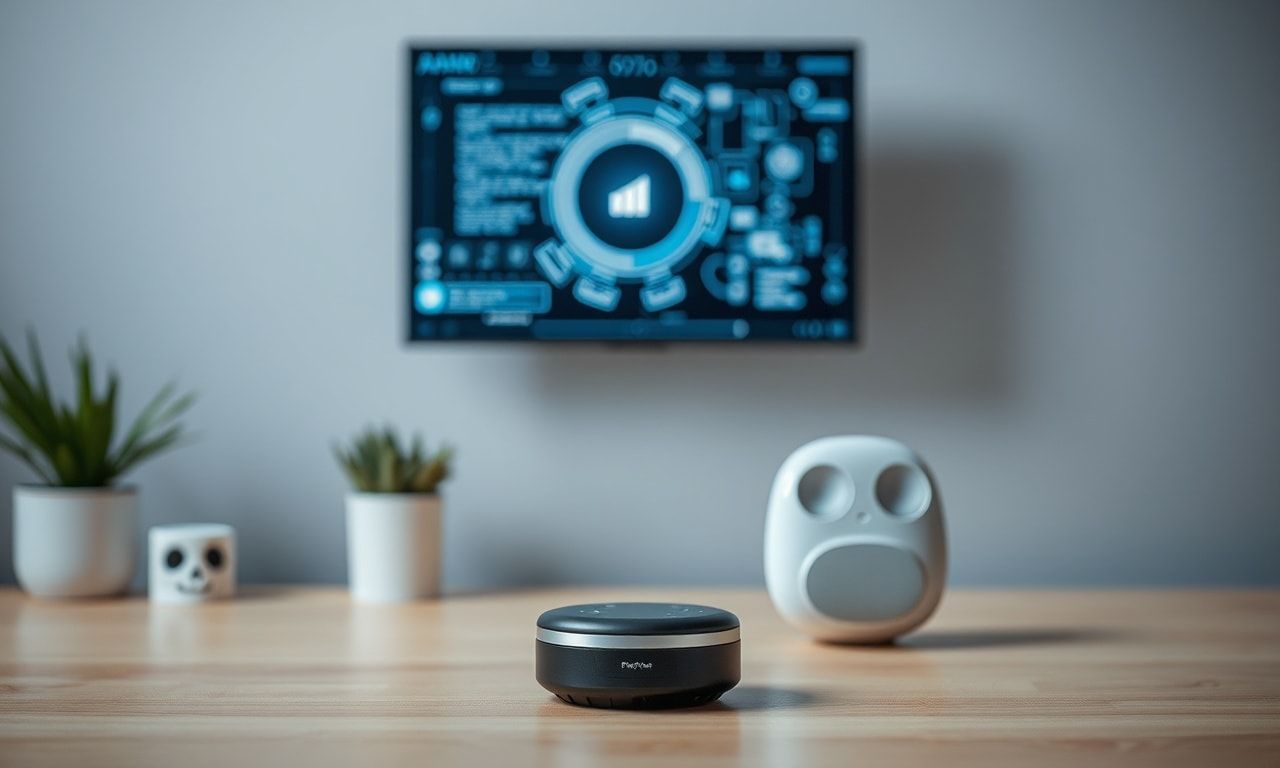
Look, I’m a Tech Enthusiast… But
I’ve been in this industry for 20+ years. I’ve seen floppy disks give way to cloud storage. I’ve watched dial-up connections evolve into 5G networks. And I’ve owned just about every smart home gadget under the sun. But lately? I’m having a crisis.
It started last Tuesday. I was trying to order pizza. You know, the usual: ‘Hey Google, order a large pepperoni from Mario’s.’ Simple, right? Then Google Assistant hit me with, ‘Which Mario’s would you like to order from? There are three within delivery range.’ I mean, come on. There’s only one Mario’s that delivers to my place. I know this. Google should know this. But no. I had to manually select it. Again.
And that’s when it clicked. My smart home is making me dumber. Not smarter. Dumber.
My Love Affair with Gadgets
Let’s rewind to 2005. I was at CES in Las Vegas, and this guy named Marcus—let’s call him Marcus—showed me the first Philips Hue prototype. ‘This is the future,’ he told me. And I believed him. I became an early adopter. Then came Nest, then Ring, then August, then… you name it. My house was a damn lab.
But here’s the thing: I’m not a developer. I’m not some tech genius who can code my way out of a paper bag. I’m a writer. A journalist. I want tech to work for me, not the other way around.
The Illusion of Convenience
Remember when we used to have remotes? One remote. For the TV. Now I’ve got a remote for the lights, one for the thermostat, one for the blinds, and a damn app for the coffee maker. And they don’t even talk to each other half the time.
About three months ago, I was trying to watch a movie. I hit play on my Apple TV. The lights were still on. So I said, ‘Hey Siri, dim the lights.’ Nothing. ‘Hey Google, dim the lights.’ Still nothing. Turns out, the Philips Hue bridge was down. Again. So I had to get up—physically get up—and dim the lights manually. Which, by the way, is exactly what I would’ve done if I’d just installed a regular dimmer switch.
And don’t even get me started on updates. My Nest thermostat is constantly updating. At 2 am. Waking me up. I’ve talked to customer service—twice. They’re ‘looking into it.’ Yeah, right.
The Privacy Paranoia
I’m not a conspiracy theorist. But I’m also not stupid. I know these devices are listening. All the time. I remember having coffee with a colleague named Dave last year. He told me, ‘They’re not just listening for the wake word. They’re listening to everything.’ I laughed it off. But then I read an article about some guy in Germany who found out his Amazon Echo had recorded a private conversation and sent it to a random contact. Which… yeah. Fair enough.
So I started paying attention. I noticed my Google Home Mini would sometimes respond to conversations it wasn’t supposed to. Like, I’d be talking to my wife about mortgage comparison best rates 2026 (yes, we’re nerds like that), and suddenly Google would chime in with some irrelevant fact. Creepy.
I’m not saying they’re out to get us. But I am saying I don’t need a device that’s always listening. I don’t need a device that’s always learning. I just need a device that works.
The Promise of AI
Don’t get me wrong. I love AI. I love what it can do. I love the potential. But right now? It’s a mess. It’s overpromising and underdelivering. And I’m tired of it.
I remember talking to a friend named Lisa at a conference in Austin last year. She works for a big tech company. I asked her, ‘When is this stuff gonna work seamlessly?’ She laughed and said, ‘Never. Because humans are messy. And tech is messy. They don’t mix well.’
And she’s right. We’re not living in a sci-fi movie. We’re living in the real world. And in the real world, tech should make our lives easier. Not harder.
So What’s Next?
I’m not giving up on tech. But I am giving up on the gadgets. I’m going back to basics. I’m going to try and find a balance. Because honestly, I just want to order a pizza without a 10-minute conversation with my assistant.
And maybe, just maybe, I’ll finally get some sleep at night.
But for now, I’m done. I’m out. I’m going to enjoy the simple things. Like a remote that only controls the TV. And a thermostat that doesn’t need to update at 2 am.
Because at the end of the day, tech should work for us. Not the other way around.
About the Author
John Carter has been a senior editor for major tech publications for over two decades. He’s seen the industry evolve from floppy disks to AI, and he’s not always impressed. When he’s not writing, he’s probably trying to order pizza without talking to a robot.
In a field dominated by rapid technological advancements, it’s crucial to critically evaluate quick solutions; this thoughtful piece on why quick fix diets fall short offers a refreshing perspective relevant to anyone skeptical of instant fixes.
For a deep dive into how emerging technologies and AI are reshaping athletic performance and fan engagement, check out this insightful piece on the future landscape of sports innovation.
If you’re intrigued by the latest in AI-driven devices, don’t miss this in-depth look at the evolving landscape of voice assistants and smart gadgets in voice technology innovations.